
- New
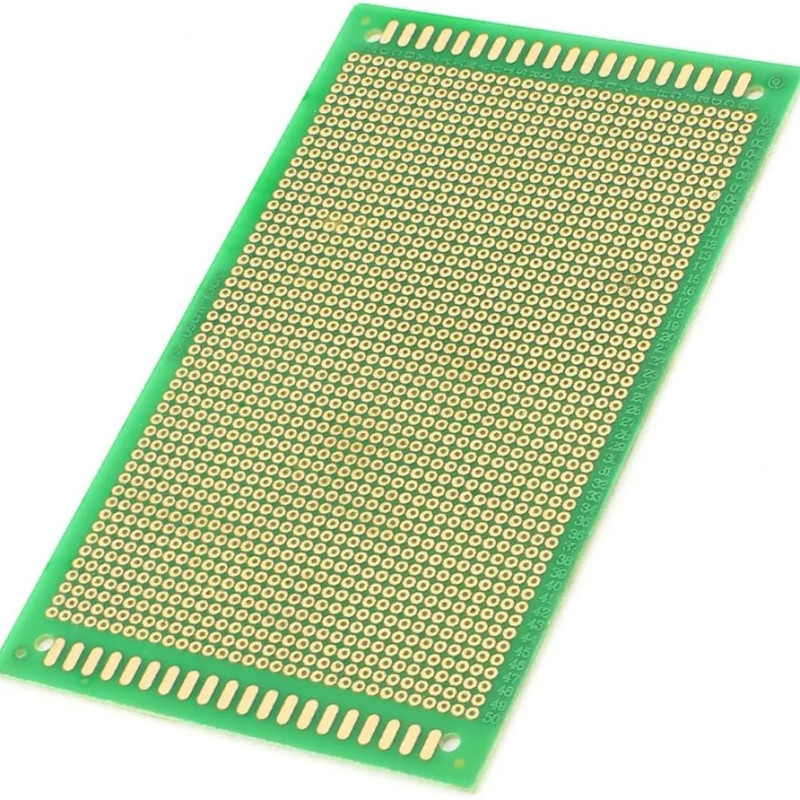

A 90 × 150 mm perforated circuit board designed for assembling, testing and developing electronic circuits using manual soldering.

Security policy

Delivery policy
The 90 × 150 mm Perforated Circuit Board provides a practical solution for building electronic prototypes, experimental circuits and custom projects without manufacturing a dedicated printed circuit board.
Its regularly arranged holes make it easier to install conventional through-hole electronic components, including resistors, capacitors, diodes, transistors, integrated circuits, connectors and sockets.
Electrical connections can be created manually using solder, wires or component bridges. The available board area accommodates larger projects or can be divided into smaller sections when required.
It is suitable for electronics workshops, repairs, educational projects, amateur radio applications and converting breadboard-tested designs into permanent soldered circuits.
This is a prototyping board and does not contain a predefined circuit. Connections between components must be planned and created manually.
Before assembly, check the component layout, electrical connections and required space. Use suitable tools and eye protection when cutting the board.
A 90 × 150 mm perforated circuit board designed for assembling, testing and developing electronic circuits using manual soldering.


